Cosmetic Gift Sets: Structuring One Box for Several Products
Selling one cosmetic product in a box is a design exercise. Selling four of them in one box is a structural one. The moment a gift set holds more than a single SKU, every decision multiplies: how many products, in what order the customer meets them, what stops a glass bottle from meeting a glass jar in transit, and whether the set can be assembled quickly enough for a seasonal launch. This guide walks through the way we approach multi-product cosmetic sets in wood and leather, from set architecture to the lining decision that determines how the set feels when it opens.
What makes a gift set different from a single-product box
A single-product box has one job: hold the product, present it, protect it in transit. A gift set has to do that for several objects of different sizes, weights and fragility — and it also has to tell a story with a sequence. Which product does the customer see first? Is the set read as a curated ritual, or as a pile of samples in a tray?
There is also an operational layer most briefs miss. A gift set is assembled by hand, usually close to a launch date, sometimes in a third-party fulfilment centre. If a tray is tight, or the products have to go in in a specific order that is not obvious, assembly time per set climbs fast. Structure and assembly line up more than most buyers expect — our custom packaging process guide covers the production side of that relationship.
Four common set architectures
| Tray in lid | One rigid tray holds all products side by side. Simplest to assemble, strongest structure, cleanest retail look. |
|---|---|
| Two-layer stack | A removable top tray sits over a lower compartment or drawer. Creates a reveal sequence; adds a lift-out action. |
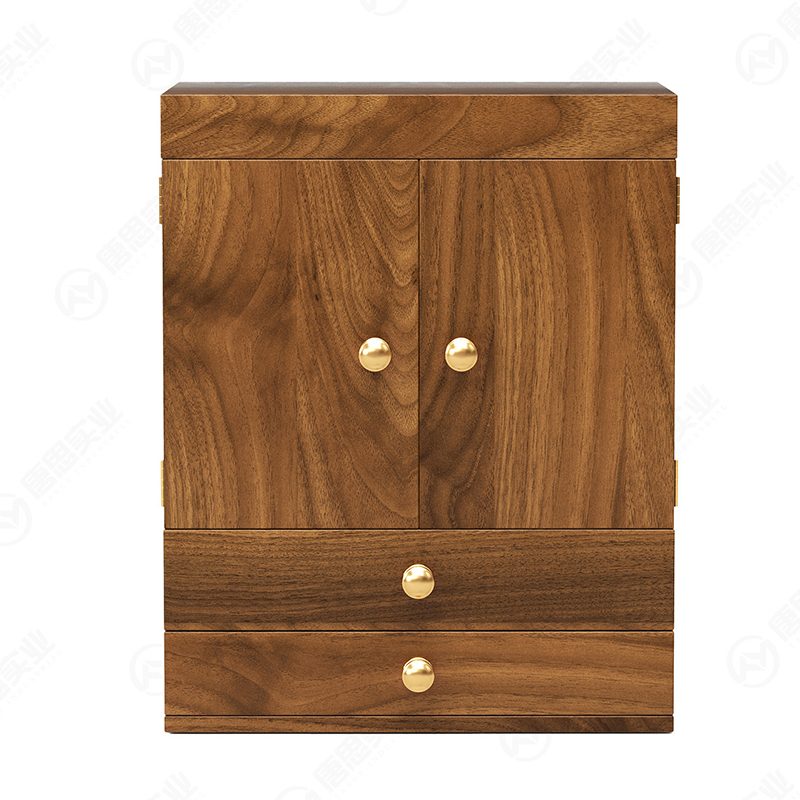
| Drawer set | Two or three sliding drawers behind a wrapped front. Reads as furniture; best for higher product counts and gifting occasions. |
| Book-style fold-out | Box opens like a book with hinged panels. Strong for narrative sets and for sets that need a printed story against each product. |
Planning the Z-axis: layers, sequence and reveal
Most gift-set problems are vertical. Once the footprint is fixed by the largest product, the only remaining space is height — and height is where the reveal lives. A two-layer set that lifts the hero product into view in the first movement feels considered; the same products in a flat tray feel like a sampler box.
The practical approach is to draw the set as a vertical section, not a top view. Mark the height of each product, add the clearance the tray and lid need, and check whether the stack still closes without compressing anything. Fragile items — glass bottles, pressed powders, brush heads — go in the layer that moves least, and never directly beneath a rigid tray that will be dropped back into place thousands of times.
Fixed trays vs removable trays
Fixed trays hold the set rigid and keep every product perfectly aligned. They are the right answer for retail display and for larger sets where the customer is not meant to rearrange anything.
Removable trays add a second life to the packaging: once the set is opened, the tray can be lifted out and the base used as a storage box or vanity organizer. That refill behaviour is a real selling point for gift sets positioned around ongoing use rather than a single occasion.
Hybrid layouts — a fixed outer tray with one or two removable inserts — solve the most common structural headache: a bulky product that must sit rigidly beside smaller items that buyers like to rearrange. Both fixed and removable formats are built in the same materials, so the choice is a decision about the customer journey rather than about cost or quality.
Fitting mismatched SKUs into one footprint
A typical beauty set contains a bottle, a jar, a tube and an applicator, each with a different diameter and height. Three techniques keep that from looking improvised:
- Group by diameter, not by product type — similar cylinders read as a set even when the contents differ
- Use a shaped cut-out, not a square one — a cut-out that follows the base profile holds a round bottle from moving without visible straps or clips
- Give the odd shape the space it needs — one product that does not fit the grid should get its own bay rather than a stretched hole
The same insert logic used in jewelry packaging applies directly here; our jewelry box inserts guide covers how suede, velvet, EVA and foam behave as insert materials, which is the layer that decides whether a set survives shipping intact.
Choosing the exterior: wood, leather or lacquer
A wood exterior reads natural, permanent and gift-worthy, and suits sets built around a single reusable object such as a vanity organizer. A leather or PU-wrapped exterior reads soft-touch and portable, and works well when the set itself is meant to feel like a personal accessory. A high-gloss piano lacquer or matte lacquer finish over wood or MDF gives the deepest colours and the strongest shelf presence, which is why it dominates limited editions and seasonal launches.
Two structural implications matter at this stage. Wood sets are heavier and benefit from a rigid tray that ties the structure together; leather-wrapped sets need the wrap planned around any drawer or fold-out movement, so the material never pulls at the edges. Both belong to the same custom rigid box family — a rigid, wrapped structure rather than a folded board.
Interior lining: colour, contrast and durability
The lining is the first thing seen when the set opens and the last thing considered in most briefs. Suede reads tailored and tight-napped; velvet reads plusher and more boutique. Contrast is a deliberate tool: a beige suede interior inside a dark lacquer shell lifts the products, while a matched interior feels quieter and more architectural.
Durability matters more here than in a watch box. Cosmetic sets get opened in bathrooms and on dressing tables, so the fabric has to be fade- and moisture-tolerant rather than merely beautiful. Tell your manufacturer where the set will live, not just how it should look.
Weight, packing and freight: the third layer you pay for twice
Every extra layer adds structure, lining, glue and assembly time — and then adds shipping weight. On a multi-layer set the freight implication is not only the extra grams: added height can push a carton into a different dimensional bracket, which changes how many sets fit on a pallet and, with it, the total landed effort.
The working rule is to justify each layer with a customer-facing function: a layer that reveals a hero product, or that converts into a usable tray, earns its place. A layer that exists only to fill space does not. Our luxury packaging cost guide breaks down these structural drivers in more detail.
How to de-risk the first set
Multi-product sets benefit more from sampling than any single-product box, because there are simply more ways to be wrong. Build the sample with the actual products, or accurate mock-ups with the true dimensions and weights, and test three things by hand: whether every item seats without force, whether the set survives being shaken closed, and whether a person assembling it for the first time can tell which product goes where.
Sampling takes about 15 days and includes 3D digital proofing plus 2 rounds of revisions. Mass production takes about 30 days after order confirmation, with each process inspected before moving to the next, and third-party inspection is welcome. We hold ISO 9001, FSC, CE, RoHS and REACH certifications, and we have been manufacturing wooden and leather packaging in Guangzhou for 18 years, serving more than 3,700 brands.
Custom cosmetic sets start at 500 pcs per design. If you want to evaluate our structure and lining quality before committing, browse the in-stock watch boxes from our Tancy line — the same insert and lining work, from 50 units. To plan your own set, start from custom cosmetic boxes, review the full capability list on our service page, or send your product list and dimensions through the contact page — we reply within 24 hours.
We build rigid sets in wood, leather and lacquer finishes for fragrances, skincare, makeup and beauty gift programmes, with trays and inserts shaped to the individual bottles, jars, tubes and applicators in the set. Design, structure and process customization are all part of our standard OEM and ODM service.
Fixed trays keep every product aligned and rigid, which suits retail display and larger sets. Removable trays give the packaging a second life as a storage box or vanity organizer after the set is opened. Hybrid layouts — a fixed outer tray with removable inserts — are usually the best of both.
Custom OEM and ODM cosmetic sets start at 500 pcs per design, because the tray tooling, cut-outs and lining are set up specifically for your product dimensions. Ready-to-ship designs start from 50 units per design if you want to evaluate structure and finish first.
Sampling takes about 15 days including 3D digital proofing and 2 rounds of revisions. Mass production takes about 30 days after order confirmation. Payment is by T/T with a 30% deposit and the 70% balance before shipment; goods ship EXW or FOB Guangzhou, with DHL, FedEx and UPS available for express volumes.