Cosmetic Packaging Trends: Sustainable Materials That Still Feel Luxe
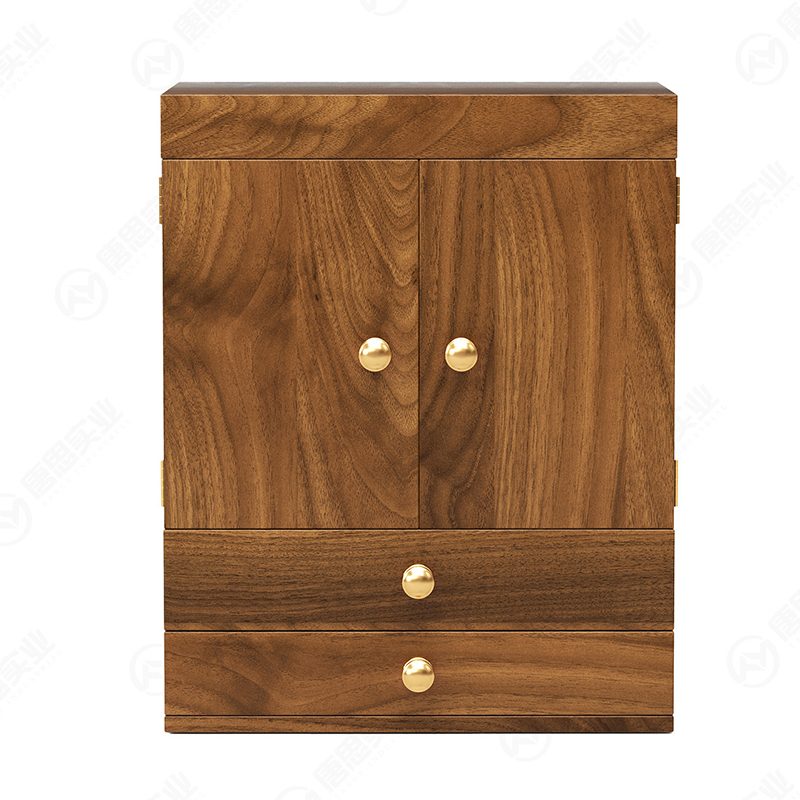
Ask ten beauty brands what "sustainable packaging" means and you will get ten answers — recycled content, plastic-free, refillable, carbon-neutral, or simply "less of it". What most of them share is a suspicion of the folding carton that gets thrown away in eight seconds. For a brand selling a luxury serum, a box that outlives the bottle is no longer a contradiction; it is the point. Here is how wood, lacquer and leather fit that brief, and what to specify when you brief a manufacturer.
The shift: from disposable to keepable
The older definition of premium packaging was weight and gloss on the outside, disposable on the inside. The newer one is harder to fake: a box the customer keeps on the shelf, repurposes as a jewellery or cosmetics tray, and associates with the brand every time they open it. That is a materials decision before it is a marketing decision — and it is a decision paper-based structures cannot make, because the material's whole value proposition is that it is cheap to discard.
What "sustainable" can honestly mean for a wooden or leather box
Wooden and leather-wrapped boxes are not automatically sustainable, and it is worth being precise about why. Three honest arguments exist. First, durability: a solid structure that survives a decade replaces ten disposable alternatives. Second, repairability: a scuffed lacquer surface or a worn insert can be corrected or replaced rather than scrapped. Third, second life: a drawer chest designed for a serum set becomes general storage the moment the product is gone. What we will not claim is a recycled-content figure or a specific carbon saving, because those depend on your supply chain, not on ours.
Material reality: what we actually work in
| Solid wood | Walnut, oak and similar species — structural weight, visible grain, repairable surfaces |
|---|---|
| MDF | Stable panels that hold a flawless lacquer finish and consistent dimensions |
| Piano lacquer | High-gloss or matte surfaces built in layers, colour-matched to your reference |
| Leather / PU | Wrapped exteriors and linings, with hand-made leather box assembly on site |
| Inserts | Suede, velvet, EVA and foam supports shaped to the product |
Every cosmetic box we make sits inside that list. If a structure needs a material outside it, that is a different conversation — and usually a different supplier.
FSC-certified wood: what the certificate covers
FSC is one of the certifications we hold, alongside ISO 9001, CE, RoHS and REACH. In plain terms, it speaks to the sourcing of the wood itself: that the timber comes through responsible forest management chains rather than unverified sources. What FSC does not cover is the finish on top of it, the insert inside it, or the working conditions behind the assembly — which is why a credible sustainability brief asks for the whole picture rather than a single logo. What it does give you is a defensible answer when a retail buyer or an editor asks where the wood came from.
Lacquer instead of film: finishing choices that age well
Surface finishing is where most "sustainable" cosmetic packaging quietly reverts to plastic — a printed film on a rigid board. On a wood or MDF body, the equivalent is a lacquer system: gloss piano lacquer for a mirror surface, matte for a softer, more tactile read, or an open-pore wood finish that lets the grain carry the design. Leather wrapping and printed patterns are the other routes. All of these are applied to the box rather than laminated onto it, which is what makes a repair possible and a scratch survivable.
Structures that suit beauty products
Cosmetic packaging tends to need internal organisation rather than a single cavity. The structures that work hardest are drawer chests (a box that opens sideways and keeps working after the product is gone), flip-lid boxes with a fitted insert for a hero product plus accessories, tiered trays and multi-compartment organisers where several items travel together, and magnetic-close lids for a quieter, more deliberate opening. Choosing the structure early matters, because the insert is designed around it — see our page on custom cosmetic boxes for the configurations we build.
Inserts, refills and second-life thinking
The insert is the part your customer touches first and the first thing to fail. Suede and velvet give a soft, luxury read; EVA and foam give dimensional accuracy and drop protection. If longevity is part of your brief, ask for inserts that can be lifted out and replaced, and for cavities sized to a product family rather than a single SKU — so next season's slightly taller bottle still fits. That one decision extends the life of a box more than any finish upgrade.
Compliance: what a beauty brand should ask for
| Wood sourcing | FSC certification |
|---|---|
| Finish safety | RoHS and REACH — relevant for coatings and hardware in contact with a retail environment |
| Quality system | ISO 9001, with each production step inspected before the next begins |
| Third-party checks | Third-party inspection (e.g. SGS) accepted on request |
| Consistency | CE where applicable to the product |
Ask for these before the sampling stage, not after. Certification questions that surface during trial production have a way of turning into schedule problems.
Why weight and touch still sell beauty
The unboxing moment is a physical argument, and it is made with mass. A lacquered wooden lid that closes with resistance, a leather-wrapped drawer that slides without rattle, a suede insert that holds a bottle upright — none of this can be communicated by a photograph, which is exactly why it works in the hands of an influencer or a counter customer. For brands whose sustainability story is "keep it, don't bin it", the tactile proof and the environmental argument are the same feature.
How to brief a supplier
| Artwork | Logo and design files in AI, C4D or PDF format |
|---|---|
| Product dimensions | Exact sizes of every item the box must hold, including the tallest and widest variants |
| Material direction | Solid wood, MDF, lacquer or leather; gloss or matte; colour reference or Pantone |
| Structure | Drawer, flip lid, tiered tray, insert layout, closure type |
| Branding | Logo positions and preferred finishing method |
With that in hand we confirm the sampling plan within 24 hours. Custom OEM and ODM cosmetic boxes start at 500 pcs per design, sampling takes about 15 days with 3D digital proofing and two rounds of revisions, and production runs about 30 days after order confirmation. If you are still testing the market, ready-to-ship watch and accessory designs from our Tancy line start from 50 units and can validate a look before you commit to tooling — see the wooden boxes and leather boxes pages for how the same materials perform in other categories, or send your brief through the contact form.
Yes. Our cosmetic packaging follows the same construction as the rest of our lines: solid wood or MDF structures with high-gloss piano lacquer or matte lacquer finishing, or hand-made leather and PU-wrapped exteriors, with fitted suede, velvet, EVA or foam inserts shaped to your product.
FSC is one of the certifications we hold, along with ISO 9001, CE, RoHS and REACH. FSC covers the sourcing chain of the wood itself — it does not cover the finish, the insert or the assembly process, which is why a credible sustainability brief should ask about the whole build rather than a single logo.
Custom OEM and ODM cosmetic boxes start at 500 pcs per design. Sampling takes about 15 days including 3D digital proofing and 2 rounds of revisions, and mass production takes about 30 days after order confirmation, with each process inspected before moving to the next.
Yes — logo, design and craftsmanship customization are all supported, with lacquer colour matched to your reference. Send artwork in AI, C4D or PDF format together with the exact dimensions of every item the box must hold, your material and finish direction, and your preferred logo positions; we confirm the sampling plan within 24 hours.