Jewelry Boxes by Product Type: Rings, Necklaces, Earrings and Sets
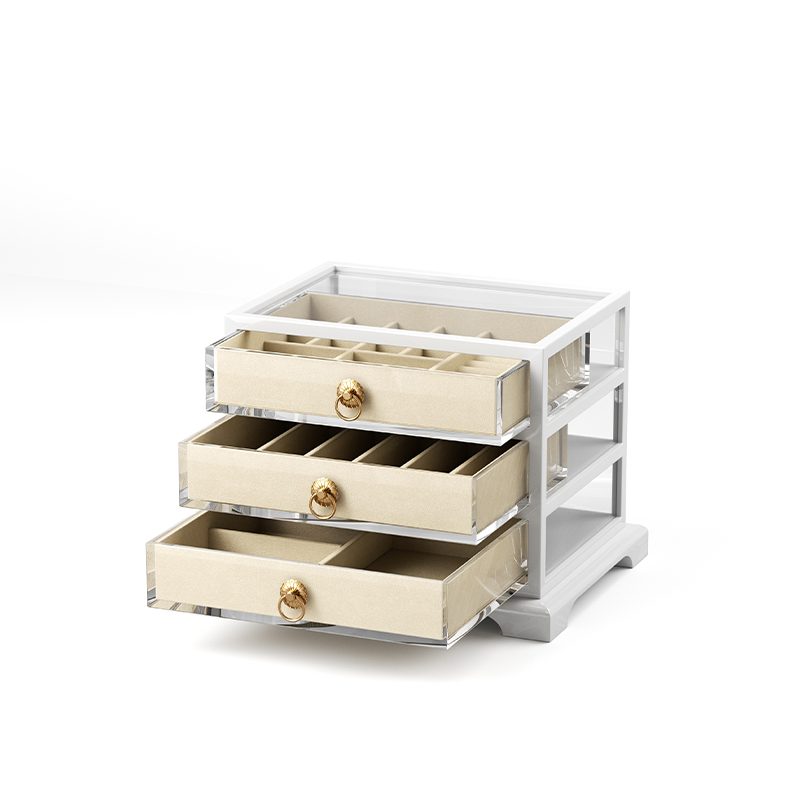
Rings, necklaces, earrings and sets do not want the same box. A ring needs to be presented upright and small; a necklace needs length and somewhere for the chain to go; earrings need pairs kept together; a set needs all of it in one footprint without looking like a parts bin. Treating them as variations of one product is the reason so many jewellery boxes look right in a catalogue and wrong on a counter.
This guide works through the four product types and what each one asks of the box — structure, insert, material and finish — and what to specify before sampling.
Rings: presentation at small scale
A ring box is the smallest format and the most sensitive to proportion. The ring is held upright in a slot or a roll so the stone faces the person opening the box, which means the insert is doing a precise job: gripping the band without distorting it and holding the ring at the angle the lid reveal was designed around.
Single ring boxes are gift and proposal formats, and they are usually the most decorated — lacquer, foil, a wrapped finish. Multi-ring trays and rolls belong to storage rather than gifting, and they are specified by ring count and band width rather than by stone size.
Necklaces and pendants: length is the constraint
A necklace cannot be coiled carelessly. The chain needs a path — a hook or a recess at the top, a channel or a soft bed for the length to lie in, and enough room that it does not kink when the box is closed. Pendants add a second requirement: somewhere for the stone to sit without being pressed by the lid.
That is why necklace boxes are longer and shallower than their footprint suggests, and why a box specified by outer dimensions alone usually fails. Give the chain length and, if there is a pendant, its dimensions.
Earrings: pairs, and keeping them together
Earrings are specified in pairs and lost in singles. The insert has to hold two items in a defined relationship — studs in a pair of holes or a card, drops hanging from a bar or lying in a shaped recess — so the pair is presented as a pair.
Hanging formats suit drops and show them well; recessed formats suit studs and travel better. Sets that mix earrings with a necklace or a ring need a compartment per item type, and this is where a single-cavity insert stops working.
Sets and multi-piece presentations
A bridal set or a gift set has to hold items of different sizes in one box without any of them moving. The usual answer is a compartmented insert with a step or a shaped recess per item, and a lid depth set by the tallest piece.
The mistake to avoid is designing the box around the largest item and letting the smaller ones rattle in oversized cavities. Specify the set contents item by item; changing one item after tooling usually means a new insert, not a new hole in the old one.
Inserts: what holds each type
Velvet and suede are the presentation standard for rings and earrings and give the soft, traditional look. EVA and foam are better for necklace channels and for anything that ships, because they hold shape and absorb movement. Moulded trays are the most precise and suit sets where every item has a defined place.
Whichever you choose, the item should be held at two points or seated in a shaped recess, never left loose in a lined cavity. Loose items mark the lining and each other.
Materials and finishes for jewellery
Wood and MDF bodies — lacquered, veneered or painted — suit gift and storage formats and carry foil, screen print or a metal plaque well. Leather-wrapped bodies suit travel cases and softer presentation, and they take debossing rather than laser work. Acrylic or glass elements are used for display pieces where visibility matters, and they should be specified as a material in their own right.
Piano lacquer gives the high-gloss gift-box look and shows fingerprints under retail lighting; matte and open-grain finishes hide both. Choose by where the box will sit.
Storage boxes and multi-drawer cabinets
Jewellery storage is a different problem from jewellery gifting. A storage box is opened every day, holds items of mixed size, and has to keep them untangled — which usually means compartments, drawer runners and a frame that takes repeated use rather than a single presentation cavity.
Multi-drawer cabinets in wood with velvet or suede linings are the common answer for larger collections, and they are specified by what goes in each drawer rather than by total piece count.
Display trays: the retail format
A display tray presents jewellery without closing over it. It suits a counter or a showcase where an assistant handles the pieces, and it is specified for visibility and reach rather than protection. Open trays also make the insert the visible surface, so the lining choice matters more than it does in a closed box.
The trade-off is obvious but worth stating: a tray does not protect its contents in transit. If the packaging has to ship to an end customer, it needs a lid.
One thing to check before you commit
If a design direction uses a character, a licensed motif or another brand's visual identity, confirm the rights before it goes into tooling. Packaging produced with unlicensed artwork cannot be shipped, and the cost lands on the buyer. Generic motifs and your own mark are always safe; anything borrowed needs written permission.
What to specify
| Field | Why it changes the quote |
|---|---|
| Product type and dimensions per item | Decides insert geometry and compartment count |
| Chain length and pendant size (necklaces) | Sets the box footprint and lid depth |
| Insert material and wrap | Changes presentation, protection and cost |
| Format: gift box, storage box or display tray | Changes structure, hardware and durability requirements |
| Body and finish | Changes surface process and branding method |
| Branding method and position | Decides whether a die or plaque is needed |
| Quantity and destination | Sets tooling split and carton specification |
Custom programmes start at 500 pcs per design, with sampling in about 15 days including 3D digital proofing and two rounds of revision, and production in about 30 days after sample confirmation. Design files are accepted in AI, C4D or PDF, and enquiries are answered within 24 hours.
See custom jewelry boxes for formats, custom wooden boxes and custom leather boxes for body options, and contact us to send a specification.
Not well. A ring needs an upright slot or roll, a necklace needs a channel or hook for the chain plus room for the pendant, and earrings need a pair held in a defined relationship. A compartmented insert with a shaped recess per item type is the answer for mixed sets.
Velvet and suede for presentation pieces like rings and earrings; EVA and foam for necklace channels and anything that ships, because they hold shape and absorb movement; moulded trays for sets where every item has a defined place. Items should be held at two points or seated in a shaped recess, never loose in a lined cavity.
Custom programmes start at 500 pcs per design. Sampling takes about 15 days and includes 3D digital proofing plus two rounds of revision, with production in about 30 days after sample confirmation.
If the artwork uses a character, a licensed motif or another brand's visual identity, confirm the rights before tooling. Packaging with unlicensed artwork cannot ship and the cost lands on the buyer. Your own mark and generic motifs are always safe.