PU vs Genuine Leather: Specifying Leather-Wrapped Packaging Boxes
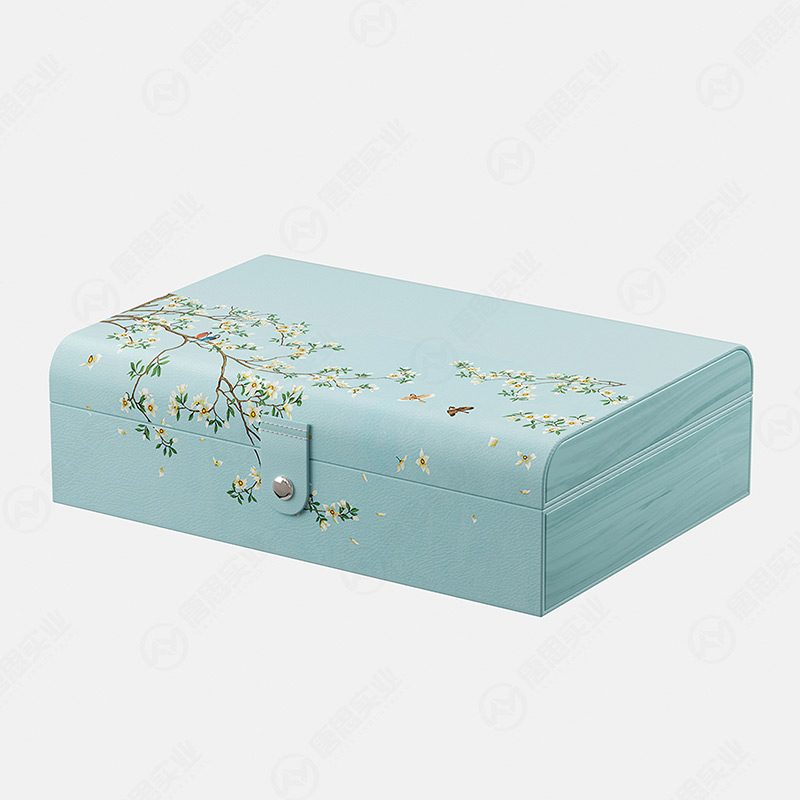
Leather is usually the last decision in a packaging brief and the first one a buyer regrets. The reason is simple: "leather" describes a surface, not a material. The difference between a genuine-leather wrap and a PU wrap is invisible in a reference photo, invisible in a specification sheet, and very visible after twelve months of handling. This guide sets out how leather wrapping actually works in production, where PU and genuine leather genuinely differ, and what belongs in a specification so the box that arrives is the box you thought you ordered.
Why the leather decision usually arrives too late
Most briefs start with structure and colour — how big, what shape, what shade — and leather only enters the conversation once those are fixed. That order is backwards. The wrap is the surface the customer actually touches, and it decides how the box ages, how it cleans, how it survives a retail shelf and a courier van, and how much of the structure's precision is allowed to show.
It also changes the structure itself. A leather wrap adds thickness at every edge, so the lid-to-base fit, the corner radius and the depth of any recessed hardware all have to be set with the wrap in mind. Locking the leather choice before the structure is finalised is the easiest single way to avoid a revision round. Our custom rigid boxes page covers the structural side of that relationship.
What "leather-wrapped" means in production
A leather-wrapped box is a rigid body — wood, MDF or a wood composite — covered in a leather or leather-look material that has been cut to pattern, thinned at the fold lines, glued and turned into the corners by hand. The body supplies geometry and strength; the wrap supplies the surface. Because the wrap is applied by hand, the quality of a leather box is decided at the corners, the seams and the inside of the lid, not in the middle of a large flat panel.
That is why leather wrapping sits beside our other hand crafts — woodwork, paint processing and final assembly — inside the same factory. See our custom wooden boxes page for how the wooden bodies behind a wrap are built.
PU vs genuine leather at a glance
| Surface | Genuine leather shows a natural, non-repeating grain; PU carries an embossed grain that repeats across the roll. |
|---|---|
| Aging | Genuine leather softens and develops patina with handling; PU keeps its original surface and can eventually crack at flex points. |
| Care | Genuine leather prefers occasional conditioning and dislikes standing water; PU wipes clean with a damp cloth. |
| Consistency | PU delivers near-identical panels order after order; genuine leather varies naturally from hide to hide. |
| Body & drape | Genuine leather is denser and turns corners with more presence; thinner PU follows tight radii more easily. |
| Best fit | Genuine leather for flagship and gift objects meant to be kept; PU for retail programmes, sets and colour-matched ranges. |
Genuine leather: what you gain and what you take on
Genuine leather is the material of choice when the box itself is part of the product's promise — a collector's case, a flagship gift, an object that should still look right in ten years. It takes a deeper grain impression, it holds a hand-stitched or stitched-and-bonded seam convincingly, and it responds to handling by looking better rather than tired.
The trade-off is variability and care. Hides differ, so panel-to-panel tone and grain will never be perfectly identical, and that natural variation has to be embraced as part of the material rather than treated as a defect. Genuine leather also needs a little attention over its life. Neither of those is a problem for a premium object; both become a problem when a brand has promised photographic uniformity across a 20,000-piece retail run.
PU: the engineered alternative, and where it earns its place
PU has closed most of the gap that used to separate it from leather. Modern PU can reproduce a convincing grain, a soft hand and a chosen colour with very high consistency, and it tolerates being wiped down — which matters for anything that will sit on a counter, in a beauty set, or in a location where cleaning staff outnumber careful owners.
Where PU struggles is time. Over years of flexing, the surface layer can separate or crack at the points that move most: the hinge line, the front edge of the lid, the corner turn. A good PU box is specified so the material is working with the structure rather than against it — thinner material on tight corners, thicker on flat lids, and a substrate flat enough that nothing is stretching the wrap from underneath.
The corner is where a leather box is judged
Any wrapping material looks acceptable across the middle of a lid. Corners are where the craft shows. A well-turned corner has no pleat, no lifted edge and no visible seam where the material was pulled around the radius; the grain flows around the corner instead of gathering in a lump. On the inside of the lid, the turned edge should sit flat enough that the lining and the lid insert do not have to hide it.
Two production details decide this. The first is skiving — thinning the material precisely along the fold lines so it can turn without bulk. The second is the corner radius itself: too sharp and no material will turn cleanly, so a wrap-friendly radius is a structural decision that has to be taken before the body is made, not after. Our custom packaging boxes overview shows how structure and finish decisions are locked together at the design stage.
The substrate beneath the wrap matters more than buyers expect
Leather wrapping does not hide what is underneath — it amplifies it. Any bump, screw head, staple or panel joint in the substrate will telegraph through the surface over time, and the flatter the wrap, the more visible the flaw. Substrates are therefore sanded and checked before wrapping, and corners are reinforced so the geometry stays square after the material is pulled into place.
Solid wood gives a heavier, warmer box and takes edge details well; MDF and engineered wood composites give a flatter, more dimensionally stable panel that resists the slight movement solid timber can show with humidity. For wrapped box ranges, that stability is often the more important quality — a wrapped box that stays square for its whole life is worth more than one built from a more expensive material that shifts.
Colour, grain and hard-wear points to specify
When you write the leather into the brief, give the factory decisions rather than adjectives. Useful specifics:
| Colour | A Pantone or physical reference, plus the acceptable tolerance across the order. |
|---|---|
| Grain | Fine, medium or heavy grain; smooth or embossed; a reference photo of the surface you want. |
| Finish | Matte, satin or gloss. Matte hides fingerprints; gloss reads more formal but shows handling. |
| Stitch | Visible topstitch or clean turned edge — and the thread colour if stitches are shown. |
| Wear points | Which surfaces contact the shelf and the customer's hands; call out anything that must not scuff. |
| Interior | Whether the lining is the same material, a contrast colour, or a different lining such as suede or velvet. |
Putting it together: a specification the factory can build from
A leather box brief that works answers four questions in order. What is the material — PU or genuine leather, and in which colour and grain? What is the substrate — solid wood or engineered panel, and what thickness? What is the structure — outer dimensions, corner radius, lid type and hardware positions set with the wrap thickness allowed for? And what is the interior — lining material, insert layout and the revealed surface when the lid opens?
Answer those before sampling and the sample becomes an approval rather than a discovery. Because we carry woodworking, paint processing, leather work and assembly in one facility, changes like a corner radius or a lining colour can be tested on the sample instead of being promised on paper. Our packaging sampling guide explains what happens in those fifteen days and how to use them well.
How to decide between PU and genuine leather
Start from the life of the object rather than from the material itself. If the box is meant to be kept, displayed and handled for years — a watch case, a collector's gift, a flagship launch — genuine leather is the honest choice, and the natural variation is part of what the customer is buying. If the box is part of a repeating retail programme, a multi-SKU set or a colour-matched range where every unit must look identical on the shelf, PU will give you consistency, easier care and a surface that survives being wiped down.
Many of our customers run both: genuine leather for the hero product and PU for the surrounding range. Because the same factory builds both, the structure, hardware and lining can be kept consistent so the range still reads as one family. If you are weighing the two for a specific product, send us the item and your reference images and we will recommend a direction — replies come back within 24 hours.
PU is an engineered material with an embossed grain that repeats across the roll, so panels are near-identical and the surface wipes clean easily. Genuine leather has a natural, non-repeating grain that softens and develops patina with handling, and it varies from hide to hide. Both are wrapped by hand over a rigid wood or engineered-wood body in our factory.
Choose by the life of the object. Genuine leather suits flagship and gift pieces meant to be kept and displayed; PU suits repeating retail programmes, multi-product sets and colour-matched ranges where every unit must look identical and the surface must tolerate regular cleaning. Both can be specified in the same structure so a range still reads as one family.
Yes. Colour is matched to a Pantone or physical reference with an agreed tolerance, and grain is specified as fine, medium or heavy, smooth or embossed. Logo treatment, stitch colour and the interior lining are confirmed in the 3D digital proof and again on the physical sample during the 15-day sampling process. Send artwork in AI, C4D or PDF format.
Custom OEM and ODM leather-wrapped boxes start at 500 pcs per design, because the wrap pattern, corner radius and hardware positions are set up for your specification. Sampling takes about 15 days including 3D digital proofing and 2 rounds of revisions; mass production takes about 30 days after order confirmation. Payment is by T/T with a 30% deposit and the 70% balance before shipment, shipping EXW or FOB Guangzhou with DHL, FedEx and UPS available for express volumes.