Custom Packaging Lead Times: Planning Sampling, Production and Shipping Around Your Launch Date
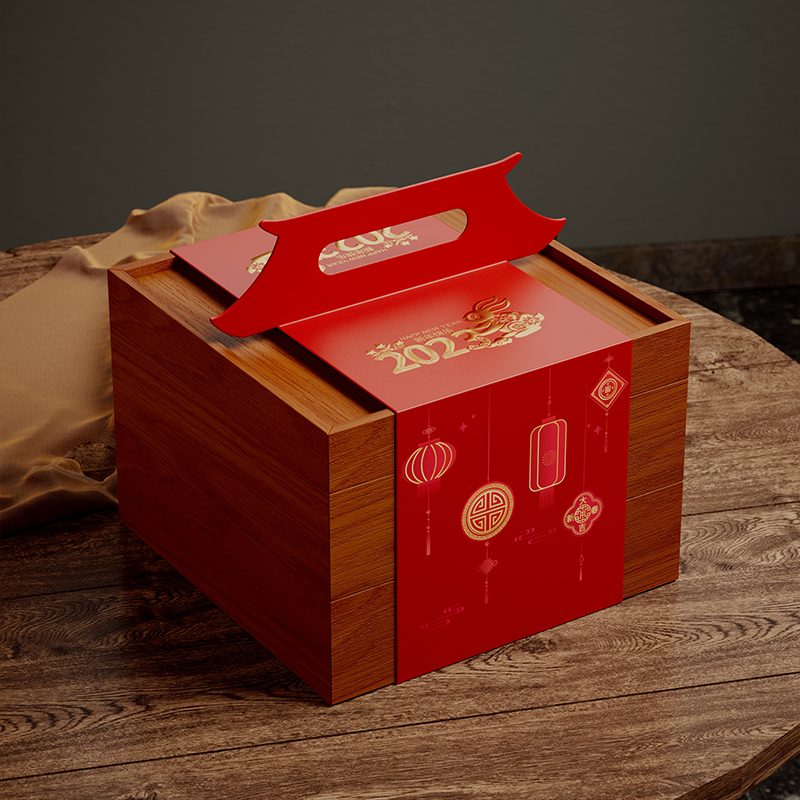
Packaging is the part of a product launch that most often runs out of calendar. The product is ready, the marketing date is set, and then someone discovers that a rigid wooden or leather box has to be engineered, sampled, approved, built, finished and shipped before it can hold anything. None of those steps can be skipped, and none of them run in parallel.
This guide lays out the four blocks of time a custom packaging programme actually consumes, what happens inside each one, and how to build a schedule backwards from a launch date. It is written for buyers commissioning wooden and leather boxes, where the timeline is driven by real material processes rather than by a printing press.
The four blocks on the clock
A custom packaging programme runs in four sequential blocks: brief and quotation, sampling, production, and freight. They cannot overlap, because each one consumes the output of the previous one — you cannot quote accurately before the structure is settled, cannot sample before the specification exists, cannot build before the sample is approved, and cannot ship before the goods are packed.
Two of those blocks have firm figures. Sampling takes about 15 days and includes 3D digital proofing plus two rounds of revision. Production runs about 30 days after sample approval. The other two blocks are the ones buyers underestimate, and they are where most late launches actually come from.
Block one: the brief, and the days most projects lose here
The brief is the only block with no fixed duration, which is exactly why it is the one that slips. A quotation needs the product dimensions, the quantity, the material direction, the finish, the branding method and the destination. Send a vague enquiry and you will spend a week in clarification before the clock on anything else starts.
The fix is cheap: send the drawing or a reference photograph, the product sizes, the quantity, the destination country and your target date in the first message. Design files in AI, C4D or PDF are accepted, and enquiries are answered within 24 hours — but the reply can only be as precise as the brief. See custom packaging boxes for what a programme covers before you write.
Block two: sampling, about 15 days
Sampling is where a drawing becomes a box you can hold. It begins with a 3D digital proof, which lets you settle structure, proportions, finish and colour on screen before any material is cut — the cheapest possible place to change your mind. It then moves to a physical sample built to the specification, followed by two rounds of revision.
Use those two rounds deliberately. Round one should be structural: does the lid close, does the product sit correctly, is the layout right. Round two should be cosmetic: colour, grain direction, logo placement, hardware. Buyers who spend both rounds on colour and then discover a structural problem start the clock again. The sampling stage deserves its own full reading — how packaging sampling works walks through the 15 days step by step.
Block three: production, about 30 days
Production is not one operation but ten, and each one has to pass inspection before the next begins: cutting the board, CNC shaping, fine sanding, primer, colour coat, controlled-temperature curing, polishing, hardware fitting, interior assembly, and final inspection and packing. Curing and polishing are the two that cannot be hurried — a finish that has not cured properly will mark, and a surface that has not been polished will not read as premium.
Capacity is rarely the constraint: the factory runs around 80,000 pieces a month with roughly 200 people, and has been building wooden and leather boxes for 18 years. What constrains a schedule is a change made mid-run — a material swap or a late logo decision sends the job back to an earlier operation. Quality is checked at every operation, and third-party inspection before shipment is welcome.
Block four: freight, chosen after the goods are packed
Freight time depends entirely on the mode you choose, and the mode depends on volume and urgency. Express carriers — DHL, FedEx and UPS — suit samples and small repeat orders. Air freight suits launches that cannot wait. Sea freight, as FCL or LCL, suits full programmes where the calendar allows it. Shipments leave EXW or FOB Guangzhou, so the clock on your leg starts when the goods are handed over, not when they arrive.
Rigid wooden and leather boxes are heavy and bulky relative to what they contain, so carton planning matters to both cost and cube: inner boxes are packed into five-ply export cartons. Decide the mode before production ends rather than after, and book it while the final inspection is running. The trade terms behind these options are set out in FOB, EXW and shipping terms explained.
Building the calendar backwards
Work from the launch date and subtract. The table below is a planning view, not a quotation — freight transit varies by destination and mode and should be confirmed for your route.
| Stage | Working time to allow | What finishes the stage |
|---|---|---|
| Brief and quotation | A few days to a week | Confirmed specification, quantity and route |
| Sampling | About 15 days | Approved physical sample after two revision rounds |
| Production | About 30 days | Ten operations completed, inspected and packed |
| Freight | Depends on mode and destination | EXW or FOB Guangzhou handover, then transit |
The practical rule for a fixed launch date: begin the conversation roughly two months before you need boxes in hand, and treat that as the minimum rather than the target. Seasonal programmes — festival gifting, annual corporate gifts — should start earlier still, because freight capacity tightens in peak season.
Five delays that are entirely avoidable
Most late packaging is caused by decisions, not by factories. The five that appear again and again: artwork arriving after tooling has started, which forces the logo method to be chosen for speed rather than quality; a material change requested after the sample is approved, which returns the job to an earlier operation; hardware — hinges, locks, closures — left unspecified until assembly, when it has to be cut into the body; an interior layout decided from a drawing rather than from the actual product, so the sample does not hold the product properly; and freight booked after production, when the cheapest and fastest options are already gone.
Every one of these is a decision that belongs in the brief. Write them into it and the calendar holds.
When the calendar genuinely will not stretch
Sometimes the date is immovable and the programme is small. In that case the honest answer is not to compress sampling — it is to change what you are buying. Ready-to-ship ranges exist precisely for this: designs already built, finished and held in quantity, sold as photographed, with no sampling round and no production wait. The in-stock watch box collection runs to more than 100 styles from 50 pieces, built on the same production lines as custom work.
The trade-off is identity: stock ships as designed and cannot carry your logo, colours or bespoke interior. Many brands run both — stock to cover the launch while a custom programme is in sampling — and graduate the proven format into custom once volume justifies 500 pieces per design. See in-stock watch boxes for that route.
What to send to start the clock today
| Item | Why it decides the timeline |
|---|---|
| Product dimensions and count per box | Sets structure, cavity sizes and insert tooling |
| Quantity per design | Custom programmes start at 500 pieces per design |
| Material direction: wood, veneer, lacquer, leather or PU | Determines which surface process and how long curing takes |
| Branding method and artwork file | Artwork must arrive before tooling, not after |
| Target delivery date and destination | Sets the sampling slot and the freight mode |
With those five items, a programme can be quoted, sampled in about 15 days and produced in about 30, with FSC-certified wood sourcing available and ISO 9001, CE, RoHS and REACH certifications held. Payment is T/T, 30% deposit and 70% before shipment. Send the brief to contact the packaging team, or see how a programme is run end to end on the service page.
Two blocks have firm figures: sampling takes about 15 days including 3D digital proofing and two rounds of revision, and production runs about 30 days after sample approval. Brief and quotation, and freight transit, vary with the specification, destination and shipping mode — which is why a fixed launch date should begin the conversation roughly two months ahead of when boxes are needed in hand.
Product dimensions and count per box, quantity per design (custom programmes start at 500 pieces), the material direction — wood, veneer, lacquer, leather or PU — the branding method and artwork file, plus your target delivery date and destination. Design files in AI, C4D or PDF are accepted, and enquiries are answered within 24 hours.
No. Production consumes the approved sample, so the two stages are sequential. What does save time is settling structure in the first revision round and cosmetics in the second, and making every material and hardware decision before tooling begins rather than during the run.
Shipments leave EXW or FOB Guangzhou. Express carriers DHL, FedEx and UPS suit samples and small orders; air freight suits urgent launches; sea freight as FCL or LCL suits full programmes where the calendar allows. Inner boxes are packed into five-ply export cartons, and third-party inspection before shipment is welcome.