Repeat Packaging Orders: Keeping Colour, Finish and Tooling Consistent Run to Run
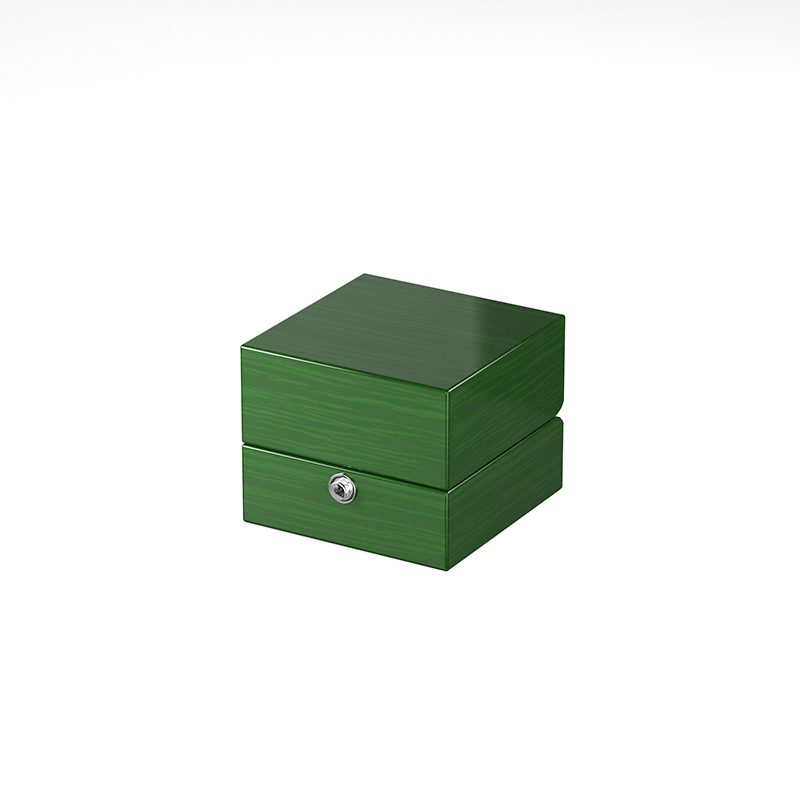
The first order of a custom box is approved against a physical sample both sides have held. The fifth reorder is approved against memory, a photograph and a line on a purchase order — and that is usually when the colour quietly moves, the grain stops matching, or the lid fits differently. Nothing went wrong in production. Something changed, and nobody wrote it down.
This guide is about keeping a wooden or leather packaging programme consistent across runs: what drifts, why it drifts, and the controls — reference samples, numbered tolerances, held tooling and versioned drawings — that make run ten look like run one.
Why run two looks different from run one
Rigid packaging is built through ten steps: cutting, CNC shaping, fine sanding, primer, colour coat, controlled-temperature curing, polishing, hardware fitting, interior assembly, and inspection and packing. Almost every source of drift lives in those steps, and almost all of it is material rather than mistake.
Wood and veneer vary between lots; lacquer varies between batches; leather and textile wraps vary between dye lots; tooling wears; spray conditions differ between seasons. Add a supplier change on a lining or a fitting, and a small variation compounds into one a customer notices on a shelf where two generations sit side by side.
Keep two signed reference samples
The single most effective control costs almost nothing: sign two samples and keep one. One goes into your archive and one stays with the factory, and every future shipment is judged against them rather than against a description.
Label them properly — order number, date, finish reference, and anything they were approved "subject to". A reference sample that is also the one used for photography gets handled, faded and eventually lost, which is why two is the number that works. Ask for reference samples to be re-issued when either side's copy is lost or damaged.
Colour is a number, not a description
"Matte black" is not a specification. Neither is "walnut". Put numbers in the specification: a reference to a standard colour system, a stated sheen level, and — critically — a stated tolerance and a statement of how it is judged. Under which light source, at what distance, and against which reference.
Sheen is where most arguments start, because two panels can have the same colour and different gloss, which reads as a different colour. If the finish is a high-gloss piano lacquer, expect the tightest control to be needed there; every dust inclusion or polish variation shows at a raking angle.
Wood and veneer: the material that never repeats
Wood is a natural material and no two lots match. Veneer has flitch sequence and grain direction; solid wood has colour variation across boards. A box built from sheet stock has its panels cut sequentially from one sheet precisely so that grain runs consistently across a lid and a base — and a reorder that starts from a different sheet will look different even if every dimension is right.
Settle two things in the specification. Whether grain matching is required at all (it costs more and slows cutting), and what happens when the available material cannot meet the reference. Options range from accepting a stated variation to approving a new reference panel before production, and that decision should be made before the run, not after it lands.
Leather and textile wraps: lots and direction
Wrapping materials are supplied in lots, and lots differ in dye depth and grain definition. The three things to specify are the material itself, its surface texture, and whether the grain has a direction that must be consistent from unit to unit. Where possible, have any leftover from the original run identified and reserved for future reorders.
The same governance applies to the material declaration. Appearance does not prove composition, so the wrap — genuine leather, PU or an alternative — should be named in the specification with a declaration supplied, rather than inferred from a photograph. Consistency claims are only meaningful against a named material.
Finishes and branding dies: what wears
Methods age differently over repeated runs. A hot foil die wears gradually at the fine strokes and eventually loses definition. A debossing die rounds at the edges. A screen mesh changes its deposit over a long run. Each shows up as a slightly softer mark, which is rarely spotted until the new generation sits next to the old one.
Agree what happens at that point: whether dies are remade on a stated schedule, at whose cost, and whether a first-piece approval is triggered for every reorder. These are small clauses and they remove a recurring argument.
Tooling, jigs and moulds: agree who holds them
Custom programmes involve tooling — cutting dies, moulds, jigs for assembly and holding fixtures for branding position. Tooling wears and sometimes has to be remade, and a replacement cut from a worn master will produce parts that do not match the originals.
Put ownership, custody and expected life in writing: who pays for tooling, who holds it, what notice is given before it is scrapped, and who pays for replacement. Without that clause, "we reused the tooling" can mean anything from the original cutter to a new one rebuilt from drawings.
Version the drawing, and freeze it
Most drift is administrative. Someone changes a screw length in an email, a lining supplier changes, a drawing gets updated without a version number, and six months later nobody can say which revision describes the shipment. Give every drawing a version and a date, require changes to be issued as a new version with the reason stated, and record which version each order was built to.
When a change is unavoidable — a discontinued lining, a fitting that is no longer made — treat it as a specification change rather than a substitution: issue the new version, get it approved, and issue a new reference sample. Silent substitutions are how a consistent programme becomes inconsistent without anyone deciding anything.
Reorder specification: what to put on file
| Item | Why it prevents drift |
|---|---|
| Signed reference sample (two copies) | The physical standard every run is judged against |
| Colour reference, sheen level and tolerance | Turns an opinion into a measurable acceptance criterion |
| Material declaration for body and wrap | Defines what is actually being re-ordered |
| Grain / grain-direction requirement, or a stated waiver | Avoids panel-to-panel mismatch arguments |
| Versioned drawings with change log | Records which revision each order was built to |
| Tooling ownership, custody and replacement terms | Prevents a rebuild producing different parts |
| Acceptance criteria: critical vs minor defects | Makes a borderline result decidable |
Reorders also need calendar room. Sampling takes about 15 days including 3D digital proofing and two rounds of revision, and production runs about 30 days after sample confirmation — so working backwards from a shelf date should start well before you "need" the goods. Custom programmes start at 500 pcs per design; shipments go out EXW or FOB Guangzhou by express, air or sea, and enquiries are answered within 24 hours.
See custom packaging boxes for how a programme is structured, our service process for the stages from brief to delivery, custom wooden boxes and custom leather boxes for the two bodies we build, and contact us to discuss a repeat programme.
Usually material variation rather than an error: wood and veneer vary between lots, lacquer between batches, wraps between dye lots, and tooling wears. What lets those variations become visible is the absence of a signed reference standard and a stated tolerance to judge them against.
That is yours to decide and should be written into the specification before production — a colour reference, a sheen level, a tolerance, and how it is judged (light source, distance, reference). Sheen is the most common source of dispute, because panels can share a colour and still read differently.
Agree it in writing: who paid for it, who holds it, what notice is given before it is scrapped, and who pays when it is remade. Tooling wears, and a replacement cut from a worn master produces parts that no longer match the originals.
If nothing changes, no new sampling is needed and production runs about 30 days after the order is confirmed. Any specification change triggers the full route again: about 15 days of sampling including 3D digital proofing and two rounds of revision, then about 30 days of production.