Solid Wood vs Veneer: Choosing the Right Body for a Rigid Box
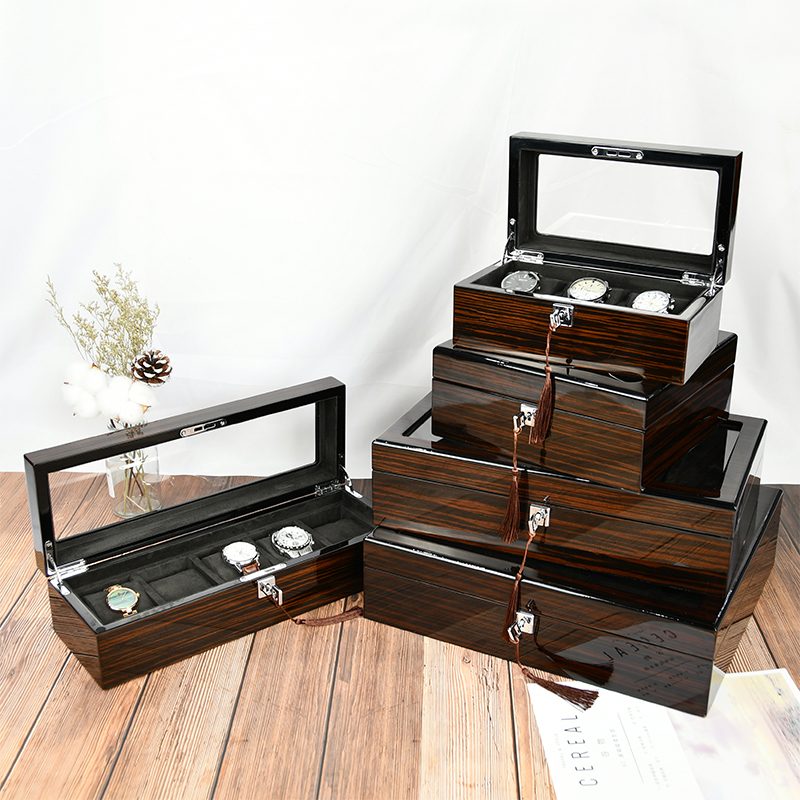
Ask for a "wooden box" and you have not yet said what the box is made of. Solid timber and veneer over a substrate look similar in a photograph, behave differently on a production line, and differ in cost, stability and what they can be finished with. Choosing between them is not a matter of which is better — it is a matter of what the box has to survive.
This guide sets out where each body works, what it costs you in lead time and finish options, and how to specify it so the sample matches the production run.
What the two bodies actually are
A solid wood body is cut from timber: the panel you see is the material. A veneered body is a thin layer of real wood laid over a substrate — usually MDF or a engineered board — so the surface is timber and the structure underneath is stable and uniform.
Both are real wood on the surface. The difference is what happens behind that surface when the box moves through a factory, a warehouse and a customer's home.
Stability: the main reason veneer exists
Wood moves. It takes on and releases moisture, and it moves across the grain more than along it. A solid panel will cup, twist or check if the moisture content is wrong for where the box ends up — which is why a solid box that was perfect in Guangzhou can arrive with a lid that no longer sits flat in a dry climate.
A veneered body is dimensionally stable because the substrate underneath does not move the way timber does. That is the single biggest argument for veneer on a box that will be shipped a long way, stored in unknown conditions, or held in a warehouse for a season before it sells.
Grain, and why solid wood wins on presence
Solid wood has depth. The grain continues around a corner, an exposed edge shows end grain, and a chamfer or a rounded profile reads as timber because it is timber. Veneer has to be laid and sequenced, and an exposed edge needs either a solid lipping or a deliberate reveal.
Where grain is the design — a walnut box with a continuous grain across lid and body, or a piece where the edge profile is part of the look — solid wood is usually the better answer. Where the box is painted, lacquered or wrapped, the substrate underneath matters far less than the surface finish, and veneer is the more predictable choice.
Finish: what each body can carry
High-gloss piano lacquer is the finish most people picture, and it is demanding. It needs a substrate that will not telegraph movement through the clear coat, which is why veneered bodies are the usual base for a multi-coat gloss: primer, colour coat, controlled-temperature curing, then polishing. Solid timber can be lacquered to the same standard, but it has to be sealed and stabilised first, and it carries more risk of movement showing up as a surface defect later.
Matte and open-grain finishes are more forgiving on both bodies. Leather wrapping is largely indifferent to what sits underneath, because the wrap covers it — which is why wrapped boxes commonly run on engineered substrates.
Weight and cost
Solid wood is heavier. That matters on a large box, on anything that ships by air, and on any lid with a hinge — a heavy solid lid puts more load on the hardware than a veneered one of the same size, and the hinge and any lid stay have to be specified for it.
Cost depends on the timber and the yield rather than on the category. A premium veneer on a well-prepared substrate can cost more than a common solid timber. What veneer reliably saves is risk: consistent panels, fewer rejects for movement, and predictable finishing.
Where each is the right answer
Solid wood suits single-item presentation boxes, boxes where the edge and grain are part of the design, and pieces that will be handled rather than shipped long distances. Veneer suits large boxes, multi-drawer cabinets, anything with a high-gloss finish, and anything that has to survive a long or unknown logistics chain.
Mixed construction is normal and often the best answer: a veneered carcass for stability with solid lipping on exposed edges, or a solid lid on a veneered body. If you are unsure, describe how the box will be used and where it will end up, and the body recommendation follows from that.
What can go wrong, and how to specify against it
On solid wood the failure modes are movement — cupping, checking, joints opening — and they are prevented by correct moisture content and by sealing all faces, not just the visible ones. On veneer the failure modes are delamination and edge chipping, and they are prevented by correct substrate preparation and by specifying how edges are finished.
Both are largely determined before a panel is cut, which is why the specification should state the body, the substrate, the finish and the edge treatment together. A box specified as "walnut" leaves all four open.
Branding and hardware on each body
On a lacquered veneered surface, hot foil gives the cleanest metallic result and laser marking suits a matte finish. On solid timber, laser marking gives a natural burned-in mark and foil works well over a sealed surface. A metal plaque set into the lid works on either and is the option when the mark has to read at a distance.
Hardware should be specified by dimensions — hinge length and leaf thickness — not described as standard. On a heavy solid lid, specify a lid stay as well: a lid that falls shut on a hand is a warranty claim waiting to happen.
How the two run through production
Both bodies move through the same ten steps: cutting, CNC shaping, fine sanding, primer, colour coat, controlled-temperature curing, polishing, hardware fitting, interior assembly, then inspection and packing. Each step is checked before the batch moves on. The difference is concentrated in the first two steps and in curing, where solid timber needs more care than a stable substrate.
Sampling takes about 15 days and includes 3D digital proofing plus two rounds of revision, which is the right moment to compare both bodies physically. Production runs about 30 days after sample confirmation.
A specification checklist
| Field | Why it changes the quote |
|---|---|
| Body: solid, veneer, or mixed | Decides substrate, panel yield and finishing route |
| Timber species and grain direction | Affects sourcing, sequencing and cost |
| Finish: gloss, matte, open-grain or wrapped | Changes process count and curing time |
| Edge treatment: solid lipping, reveal or wrap | The most commonly unspecified detail on veneered work |
| Dimensions and lid weight | Sets hinge and lid-stay specification |
| Branding method and position | Decides whether a die or plaque is needed |
| Destination climate and storage conditions | Determines whether stability or grain should win |
Custom programmes start at 500 pcs per design, and enquiries are answered within 24 hours. Over 100 ready-to-ship designs are held in stock from 50 units per design if you need to see a body and finish in person before committing. See custom wooden boxes for body options, custom leather boxes for wrapped formats, and contact us to discuss a specification.
No. Veneer is a thin layer of real wood over a stable substrate, and it exists because solid timber moves with humidity. For a high-gloss lacquer, a large cabinet, or anything shipping through unknown climates, veneer is usually the more reliable — not the cheaper — choice.
A veneered body. A multi-coat gloss needs a substrate that will not telegraph movement through the clear coat, which is why most high-gloss work runs on engineered board. Solid timber can be lacquered to the same standard but needs sealing and stabilising first.
It can, if moisture content and sealing are not specified for the destination climate. Solid panels cup or check when the surrounding humidity changes. That risk is why we ask where the box will end up before recommending a body.
Body (solid, veneer or mixed), timber species and grain direction, finish, and edge treatment. 'Walnut' alone leaves all four open. Sampling takes about 15 days and includes 3D digital proofing plus two rounds of revision, so both bodies can be compared physically before a decision.