Vanity Cases and Cosmetic Trunks: Designing a Portable Beauty Case in Wood and Leather
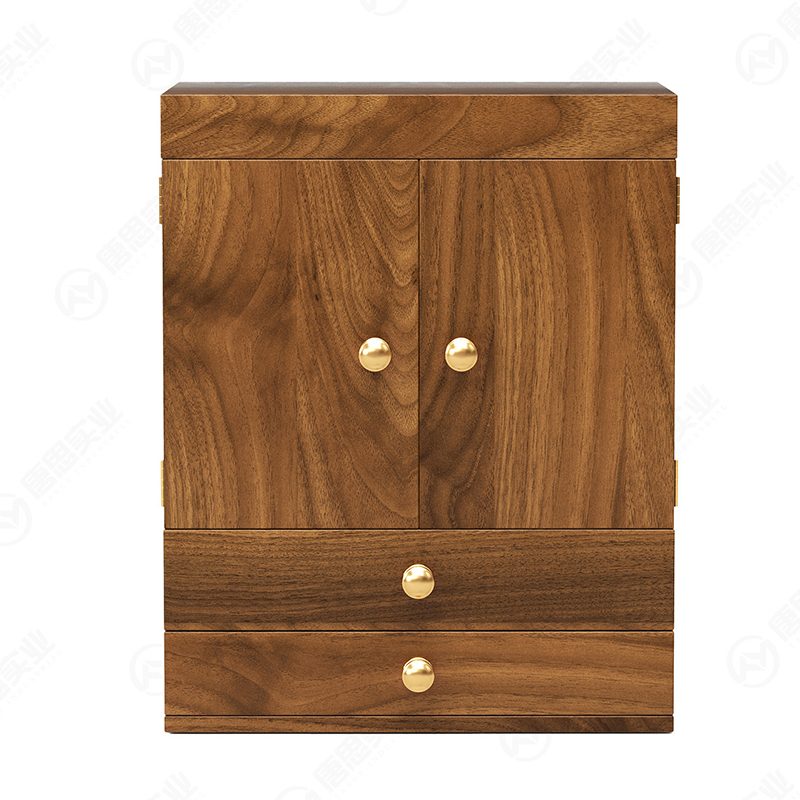
A vanity case is the one piece of cosmetic packaging that lives outside the bathroom cabinet. It gets carried, set down on a hotel desk, opened and closed every day for years, and expected to hold glass bottles upright while doing it. That makes it a different object from a gift box: part furniture, part luggage, and the only packaging most beauty customers keep on display.
This guide covers how to plan one in wood, leather or PU — starting from the kit it has to hold rather than the exterior, choosing between the three common formats, and specifying the details that decide whether it still closes properly in year three.
What a vanity case has to do that a gift box does not
Three jobs run in parallel. It has to contain a kit in compartments that survive being moved. It has to present that kit — usually with a mirror, a tray that lifts out, and a layout that reads clearly the first time it is opened. And it has to survive being carried, which is where most designs quietly fail.
A gift box is opened once, photographed, and put away. A vanity case is opened daily and closed with one hand while the other is holding a brush. Hinges, lid stays and linings therefore take far more wear than the same parts in a presentation box, and the weight budget matters in a way it never does on a shelf piece.
Start with the kit list, not the exterior
The single most useful document at briefing stage is a list of everything the case must hold, with dimensions: bottle height and diameter including the cap, jar diameter, tube length, brush length, palette footprint, and any tools. Total it, add the clearance the hand needs to lift things out, and the interior volume appears before a single sketch is drawn.
Two mistakes are common here. The first is designing for today's kit and ignoring the refill size or the travel-size line launching next season. The second is measuring the product without its cap — a pump bottle is often the tallest item in the kit and the one that decides whether the lid can close with a mirror in it.
Three formats, three different jobs
| Format | How it works | Best for |
|---|---|---|
| Tray-in-case | A lift-out tray sits over a deeper base well | Skincare kits, brushes and tall bottles that need depth |
| Fold-out lid with mirror | The lid hinges open past vertical and carries a mirror, trays on both sides | Makeup, artist kits, retail demonstration |
| Drawer trunk | Stacked drawers inside a rigid shell | Larger collections and hotel or counter use |
The tray-in-case is the most forgiving: the tray can be lifted out entirely, so the customer sees the whole kit at once, and the base well hides the ugly part of the layout. The fold-out lid with a mirror is the most theatrical and the most demanding on hardware. The drawer trunk holds the most and is the closest to furniture — it is also the heaviest, which matters as soon as someone has to carry it.
The lid: mirror, stay and hinge
A mirror turns the lid into a weighted panel. Hinges sized for a plain lid will not hold one, and a lid that falls closed on the user's fingers is the most common complaint about vanity cases that were otherwise well made. Size the hinge and add a lid stay, or design the hinge geometry so the lid rests past vertical on its own. The options and their trade-offs are set out in our box hardware guide.
Mount the mirror in a recess cut into the lid panel rather than on the surface: a recess protects the edge, keeps the lid thin, and gives the glass or acrylic somewhere to sit if the adhesive ages. Specify the mirror material and thickness, and decide at sampling whether it ships with a protective film — the inside of a lid is one of the few surfaces that is looked at directly, so a scratch there is a visible defect.
Dividers, wells and bottle clearance
Interior structure in a cosmetic case is usually a wrapped EVA or moulded core, lined in velvet, suede or microfibre. Fixed dividers give a precise, repeatable layout and are the right answer for a brand programme where every unit must present identically. Removable dividers and lift-out trays suit a kit that changes with the season.
Clearance is the detail that separates a case that feels engineered from one that rattles. A bottle should not move in its well, but it should lift out with two fingers — too tight and the customer chips a nail every morning, too loose and the glass knocks against its neighbour in transit. The lining and core options behind this are compared in our jewelry box inserts guide, and glass-specific packing advice sits in our perfume box protection guide.
Wood, leather or PU: choosing the shell
A lacquered wood shell gives the case its structure and its presence. It also gives it weight, and lacquer chips at a corner if the case is dropped — which is why corner protection and feet are not decorative details on a travel piece. The layered build-up of a piano lacquer surface is covered in our piano lacquer finish guide.
A leather or PU wrap over an engineered core softens the object, hides scuffs far better than gloss, and generally weighs less than a solid timber shell of the same footprint. It also moves the skill requirement to the wrapping: corners, edges and the inside of the lid are where a wrap either looks tailored or looks like a cover. The material differences are set out in our leather wrapping guide.
Mixed construction is common and often the right answer — a lacquered body with a wrapped lid, or a leather exterior with a lacquered tray inside. Decide which surface the customer touches most, and spend the material budget there. The full range sits under custom cosmetic boxes, with leather-led formats under custom leather boxes.
Handle, corners and feet
A handle has to attach into the structure of the case, not into the wrap. Fixed to the shell with internal reinforcement, it carries the loaded weight; fixed to the surface, it slowly pulls the material away. On a wooden case, that usually means a plate or a pair of anchors inside the lid or body panel.
Corners take the impact of every journey. Metal corner caps, leather corners or a reinforced wrap all do the same job: they move the damage to a renewable part. Feet lift the base off a wet bathroom counter and stop the bottom edge from scuffing — a small detail that decides how the case looks after two years of use.
Lining that survives real use
Velvet is the most luxurious surface and the least forgiving: powder stains it, and cleaning it usually makes the mark worse. Suede and microfibre are more practical in the same visual family. For the base well — where bottles stand and spills happen — a wipeable lining or a removable tray insert is worth more than a nicer nap.
Colour is a functional choice as much as an aesthetic one. Light linings show powder and foundation; dark linings show loose powder and dust. Mid-tones in a warm neutral hide both, which is why they dominate production kits rather than retail show pieces.
Weight budget and freight
Weigh the case empty, then weigh it loaded. The difference is what the handle, hinges and lid stay have to carry, and the total is what decides whether the case travels as hand luggage, in a retail carton, or on a pallet. A design that is beautiful at 900 grams and punishing at 2.5 kilograms loaded is a design that gets left at home.
Packing follows the same logic: an inner pack to stop movement, then a five-layer export carton for the outer leg. Cases ship EXW or FOB Guangzhou, by DHL, FedEx or UPS for smaller volumes, or by sea — full container or consolidated — for programme quantities.
The specification checklist
| Item to specify | Why it matters |
|---|---|
| Kit list with dimensions, caps included | Sets the interior volume before any design work |
| Format: tray-in-case, mirror lid or drawer trunk | Decides hardware, weight and opening sequence |
| Mirror material, thickness and mounting | Drives lid weight and hinge sizing |
| Divider system: fixed, removable or both | Sets repeatability versus flexibility |
| Shell: lacquered wood, leather or PU wrap | Determines weight, repairability and corner risk |
| Lining: velvet, suede, microfibre or wipeable | Decides how the case looks after a year of use |
| Handle attachment and corner protection | The two failure points on any carried case |
Send that with a reference photo or a sketch and a quotation follows within 24 hours. Custom vanity cases run from 500 pieces per design, with sampling at about 15 days including 3D digital proofing and two rounds of revision, and production at about 30 days after sample approval. Every order passes inspection at each of the ten production stages before it moves on, and third-party inspection is welcome — which matters more on a case with a mirror and a handle than on almost any other box we build.
A rigid, carryable case with compartments and usually a mirror — built in lacquered wood, leather or PU over an engineered core, lined in velvet, suede or microfibre. It differs from a cosmetic gift set box in that it is designed to be opened daily and carried, so hinges, lid stays, the handle attachment and the lining take far more wear.
Yes. Send a kit list with dimensions — bottle height and diameter including the cap, jar and palette footprints, brush lengths — and the tray and divider layout is developed at sampling, including 3D digital proofing and two rounds of revision. Custom layouts start at 500 pieces per design.
Sampling runs about 15 days and production about 30 days after sample approval. Cases ship EXW or FOB Guangzhou, by DHL, FedEx or UPS for smaller volumes or by sea for programme quantities, and enquiries are answered within 24 hours.
It will if three details are specified properly: a handle anchored into the shell structure rather than the wrap, corner protection that takes the impact of a drop, and a lid stay or hinge geometry that stops a mirror-weighted lid from falling closed. Every order is inspected at each of the ten production stages, and third-party inspection such as SGS is welcome.