Luxury Watch Box: The Details That Decide Whether It Feels Premium
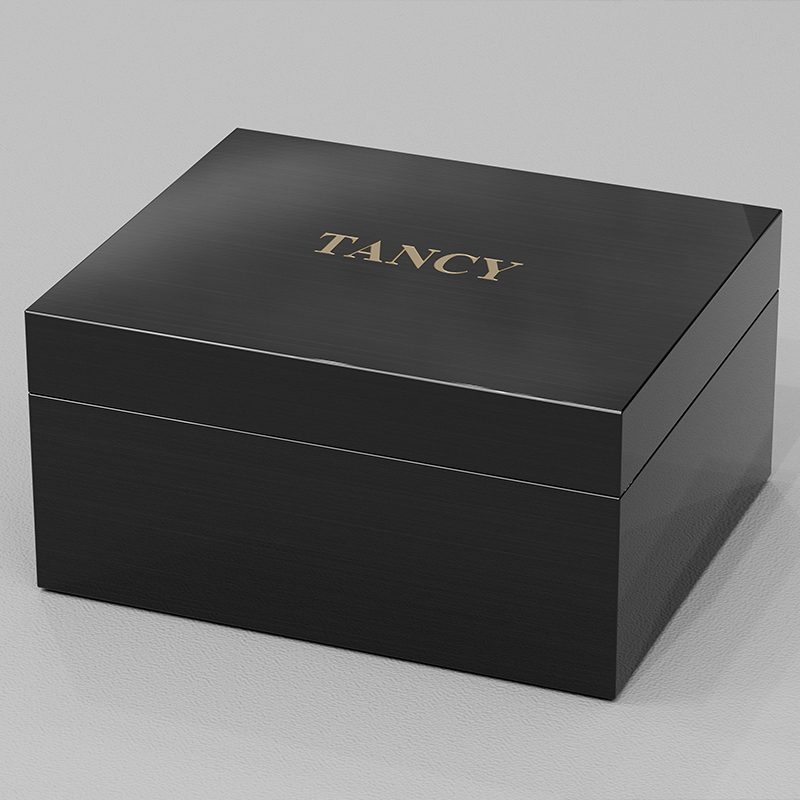
A watch box is judged in about four seconds. Someone lifts it, feels the weight shift, opens the lid, hears the hinge settle, and touches the lining — all before they look at the watch. The verdict is already formed by then, and the words that follow it ("premium", "flimsy", "well made") are not specifications anyone can work to.
This guide turns those four seconds into a list: the details that decide whether a watch box reads as luxury, what each one feels like when it is right, and how to check it at sampling instead of after five hundred pieces have shipped.
Why luxury has to be a list, not a price band
Every brand calls its box premium. The claim stays empty until it is broken into decisions a factory can hold: how thick the body panels are, what the lid does at seventy degrees, how the lining is attached at a corner, whether the pillow holds a bracelet or lets it slide. Those are the things a buyer's hands measure, and every one of them can be specified.
There is a commercial reason to treat them as a list rather than a mood. A high-value product needs packaging that sets it off, and the reverse is also true: a box that feels one step below the watch quietly discounts it at every unboxing. Packaging is never just a box — it is the first thing a customer touches and the last thing they remember.
| What the buyer does | What they are actually measuring | Where it gets decided |
|---|---|---|
| Lifts the box | Body mass and balance | Body construction, panel thickness, base board |
| Opens the lid | Hinge resistance, travel and sound | Hinge type, lid stay, lining compression |
| Touches the inside | Lining pile, edge finish, pillow firmness | Lining material and how the panel is wrapped |
| Looks for the brand | Restraint and execution of the mark | Marking method, size and placement |
We have been building wooden and leather boxes since 2008, for more than 3,700 brands, and the details below are the ones that reappear in reorder specifications. Not because a designer chose them — because somebody's customer noticed when they were missing.
Weight and balance: what the box does when you lift it
Weight is the first thing a photograph cannot tell you. Two boxes can look identical on a screen and feel like different objects in the hand, and the difference comes from structure rather than decoration: the body panels, the base, the blocking behind the hinges, and whether the shell is solid timber or a veneered core.
Balance matters as much as mass. A lid heavier than the body tips backwards the moment it passes vertical; a body much heavier than the lid feels like a toolbox. The right feel is a box that stays where you put it, at any angle. If you are still choosing between a solid body and a veneered one, the trade-offs are set out in our solid wood versus veneer guide, and the material families themselves in our watch box materials guide.
Specify a minimum body thickness, say whether the base is reinforced, and state plainly that mass must come from structure — no hidden ballast. Weight also travels: it decides carton count, freight class and how much a courier box costs to move, which is why the pallet is planned at the same time as the drawing.
The lid: travel, resistance and the sound of closing
The lid is the single most examined part of a watch box, because it is the part everyone operates. Three things are being judged at once: how far it opens, whether it stays there, and what it sounds like when it arrives.
Travel should clear the watch. A lid that opens to ninety degrees and then falls back is a box the customer holds open with their chin. Most display boxes are set to open past vertical so the lid rests against its own weight, with a stay or a soft-close mechanism carrying the last few degrees. On a small single-watch box, a felt-lined stop does the same job with fewer parts.
Sound is a tolerance question. A dull, solid closing note comes from lining meeting lining with a little compression, plus felt pads at the contact points and no metal-to-metal gap. A hollow click comes from a lid that lands on the rim before the lining has anything to press against. Open and close the sample fifty times in the meeting — hinge screws working loose, or a lid that no longer sits flush after twenty cycles, will not fix itself in production. The hardware side of this is covered in our box hinges and hardware guide.
The interior: what the hand touches first
Before the watch is lifted out, fingers are already inside the box. That is why lining quality registers so fast, and why the cheapest place to economise is also the most visible one.
| Lining | How it reads | What to watch |
|---|---|---|
| Velvet | Soft, deep colour, traditional jewellery feel | Pile shows handling marks and lint; brush direction matters |
| Suede | Matte, dense, quieter and more modern | Marks from oily fingers; needs a cleanable specification |
| Microfibre | Even, hard-wearing, easy to keep clean | Less depth than velvet; choose weight carefully |
How the lining is attached decides whether the box still looks new in year three. A panel wrapped around a board and set into the cavity keeps a crisp edge and hides the cut; a sheet glued flat into the corner shows a seam, a glue line and eventually a lifted corner. Ask which method the sample uses, and look at the four bottom corners — that is where the answer is.
Colour is a practical decision disguised as an aesthetic one. Dark linings show every speck of dust in a lit display; pale linings can pick up dye from a leather strap left in contact for months. The layout questions — how many cavities, where the lid pocket sits — belong to our watch box interior guide.
The pillow: firmness, taper and bracelet protection
A pillow that is too soft lets a watch rotate until the clasp rests on the caseback. One that is too firm stretches bracelets and makes the watch hard to remove, which customers interpret as a defect. Firmness should be specified against the watches that will actually sit on it, and checked with those watches rather than with a sample watch the factory happens to have.
Three details separate a good pillow from an adequate one. The taper: a slight reduction toward the base lets a bracelet hang naturally instead of being forced open. The contact surface: no seam should run across the face the caseback rests on, and the covering should be smooth enough not to polish a brushed caseback over time. The clearance: a deployant clasp adds height, and a slot cut for a buckle will not accommodate it.
If the box will hold both bracelets and straps, specify removable cushions in at least one size, and confirm the cushion holds position when the lid is closed and the box is carried upright.
Hardware: finish and how it ages
Hardware is where a box announces its price tier in the hand — not through ornament, but through weight and alignment. A hinge that moves without play, a lock that closes on the first attempt, a key that turns without being jiggled: these are tolerances, and tolerances are the cheapest luxury there is.
Finish choice decides how the box ages. Polished plating shows fingerprints and wears first at the thumb point; satin or brushed finishes hide handling and hold up better on a box that is opened daily. Ask what the finish is, how it is applied, and what it will look like after a few thousand openings at the same spot.
Where a metal plate carries the brand, engraving is often a better answer than printing: it cannot wear off, and it reads as intended on a small surface. The practical limits of that method — grain, depth, artwork — are in our laser engraving guide.
Branding restraint: where a mark helps and where it hurts
A watch box is not a billboard. One confident mark on the lid and a quieter one inside will read as more expensive than three marks competing for attention, and the difference costs nothing to fix at design stage.
Size is usually the problem. A mark that runs to the edge of the lid looks applied; the same mark with a clear margin around it, equal to roughly its own height, looks placed. Off-centre placement on an angled or picture-frame lid needs the margin measured from the frame, not from the outer edge of the box.
Method matters on timber. Hot foil gives a crisp metallic edge on a sealed surface, debossing gives depth without colour, and screen printing holds flat colour on a wide panel — the differences are set out in our logo finishing guide. On the inside, keep the mark small and put it on the lid lining panel or the base rather than the floor of the watch cavity, where it will be covered the moment the box is used.
The extras that complete the presentation
What sits around the watch decides whether the box feels like a kit or a container. None of it is expensive; all of it is easy to forget until the first unboxing video.
| Item | What it does | What to specify |
|---|---|---|
| Dust bag | Protects the watch in the box and travels separately | Lining-matched microfibre, drawstring, logo size and position |
| Certificate or warranty sleeve | Keeps paperwork with the watch instead of in the carton | Sleeve depth and whether it sits under the lid or in a cavity |
| Care card | Explains the finish and how to keep it | Card stock, print side, where it rests without marking the lining |
| Lid pocket | Holds the card and certificate without a separate part | Slit depth and tension — too loose and the card falls onto the watch |
Two rules keep this from becoming clutter: nothing loose inside the watch cavity, and nothing that has to be removed before the box can be closed properly. If an insert has to be taken out and put somewhere, it will be lost.
How to verify all of it before you approve
Almost every detail above is settled in sampling rather than in production. Sampling runs about fifteen days and includes 3D digital proofing and two rounds of revision, which is enough time to change a hinge, a lining colour or a mark — and not enough time to redesign a body.
Bring the watches to the sample review. Then work through five checks: lift and open the box twenty times; feel the hinge for lateral play; run a fingernail along the lining edge at the bottom corners; seat the largest watch on the pillow and close the lid; and check that the mark clears the lid frame evenly on all four sides.
Production runs about thirty days after sample approval, through ten stages from timber cutting and CNC forming to polishing, hardware fitting, interior assembly and final inspection, with each stage signed off before the next begins. Third-party inspection such as SGS is welcome, and the points worth putting on that inspection list are in our packaging QC inspection guide.
The one-page brief for a luxury watch box
Seven lines get a quotation that means something, and a sample that arrives close to the intent:
| Field | What to write |
|---|---|
| Capacity and layout | Single, multi-slot or collection format, plus the largest watch it must hold |
| Body and finish | Solid timber or veneered core, lacquer gloss level or leather wrap, colour reference |
| Lid behaviour | Opening angle, soft-close or stay, window or solid lid |
| Interior | Lining material and colour, wrapped panels, pillow firmness and taper |
| Hardware | Hinge type, closure, key or magnet, finish and plate size |
| Branding | Method, artwork file, position with margins, interior mark |
| Quantity and date | Units plus buffer, and the date the box must be with you |
Custom programmes start at 500 pieces per design — the formats and options we build are set out in our custom watch boxes section. Where a proven format already fits, the Tancy in-stock range covers more than 100 watch box styles from 50 pieces, which is how most brands test a new look before committing to tooling; the comparison is in our in-stock watch boxes guide.
The point of the list is not to make a box expensive. It is to make the result deliberate: every one of these decisions is cheaper to take at sampling than to discover in a returns report.
Six things, all of them checkable: body construction that gives real mass without added ballast, a lid that opens past vertical and stays there, a lining wrapped around panels rather than glued flat into the corners, a pillow firm enough to hold a bracelet in position, hardware that closes without play, and branding restrained to one clear mark. None of these depends on the price of the material alone — they depend on how the box is built.
Yes, and it should be decided at sampling rather than after approval. Specify the opening angle, whether the lid rests against its own weight or is held by a stay, and how the last few degrees are damped. On smaller single-watch boxes a felt-lined stop often does the job with fewer parts than a mechanism. Open and close the sample at least twenty times in the review — lateral play or a lid that stops sitting flush will show up there.
Velvet for depth of colour and a traditional jewellery feel, suede for a matte and quieter surface, microfibre for durability and easier cleaning. The more important decision is how it is applied: a panel wrapped around a board and set into the cavity keeps a crisp edge, while a sheet glued flat shows a seam and eventually a lifted corner. Check the four bottom corners of the sample — that is where the method is visible.
Custom programmes start at 500 pieces per design. Sampling runs about 15 days and includes 3D digital proofing and two rounds of revision; production runs about 30 days after sample approval. Where a proven format already fits, the Tancy in-stock range covers more than 100 watch box styles from 50 pieces. Orders ship EXW or FOB Guangzhou, by DHL, FedEx or UPS or by sea, on T/T terms of 30% deposit with 70% before shipment, and enquiries are answered within 24 hours.